Basement Drainage in St. Louis, MO
Most wet basements begin outside, with roof water and soggy soil that have nowhere to go but the foundation. This free referral service passes a request from St. Louis, Missouri homeowners to one independent local contractor, who walks the yard, looks at the gutters and the basement, and lays out drainage options and prices in writing.
Not sure if we cover your area? Check now ↓
Basement Estimate Request
Takes about 30 seconds. One local contractor gets it and contacts you.
Your details go to one independent contractor who works around St. Louis, MO, and that contractor gets in touch with you directly. See our Referral Marketing Disclosure.
Drain Tile, Explained
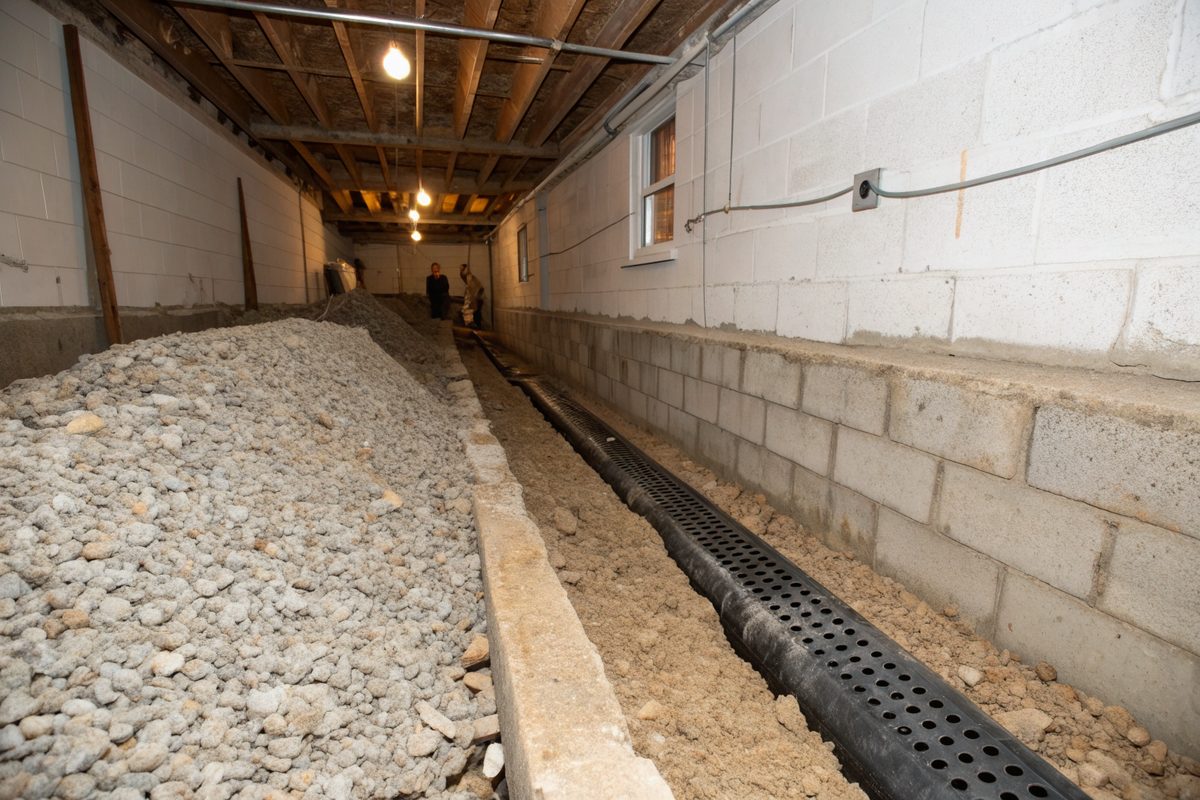
Interior drain tile is perforated pipe laid in a trench along the inside of the foundation near the footing, then covered with stone and concrete. It collects water at the joint where wall meets floor and carries it to a sump pit, where a pump sends it outdoors. An exterior French drain does a similar job in the yard, catching water in a gravel trench before it reaches the house, though it needs open ground and somewhere lower to empty.
Soil shapes the choice. Under much of the region lies wind-blown silt called loess, with clay, on top of limestone bedrock (U.S. Geological Survey), and clay can drain slowly and hold water against a wall for days after a storm. Parts of South City also rest on karst, with old sinkholes filled long ago (St. Louis Magazine). It is one more reason to let a contractor see the site before picking a fix.
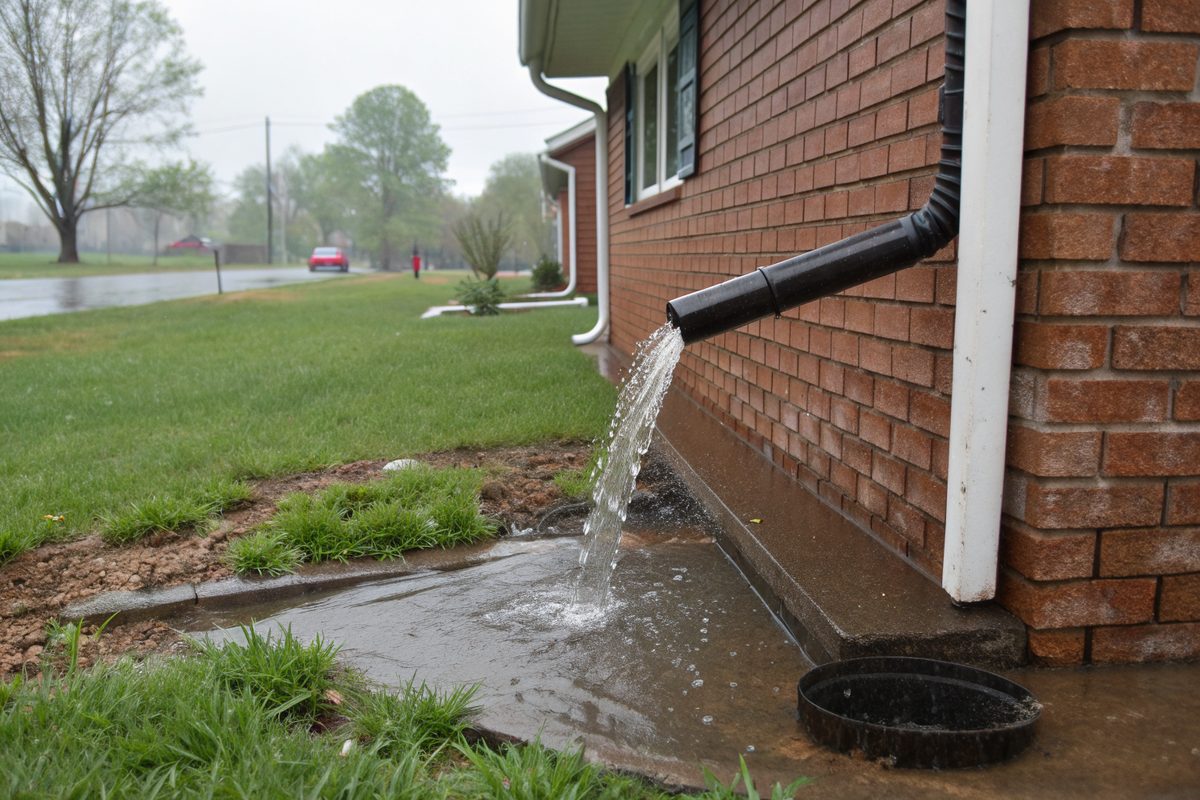
Roof water comes first, though. A single downspout can dump much of a roof's rain at one corner, so it should empty several feet out, and the soil beside the house should fall away from it. MSD, the Metropolitan St. Louis Sewer District, says many City buildings still pipe gutters underground into the sewer, and it disconnects downspouts, sump lines and yard drains from the wastewater sewer at no cost to owners in some project areas.
Common Situations
- Gutters that overflow. Cleaning, resizing or rehanging gutters that spill in a downpour.
- Downspouts emptying at the wall. Add extensions, or reroute the outlet, so roof water empties several feet from the foundation.
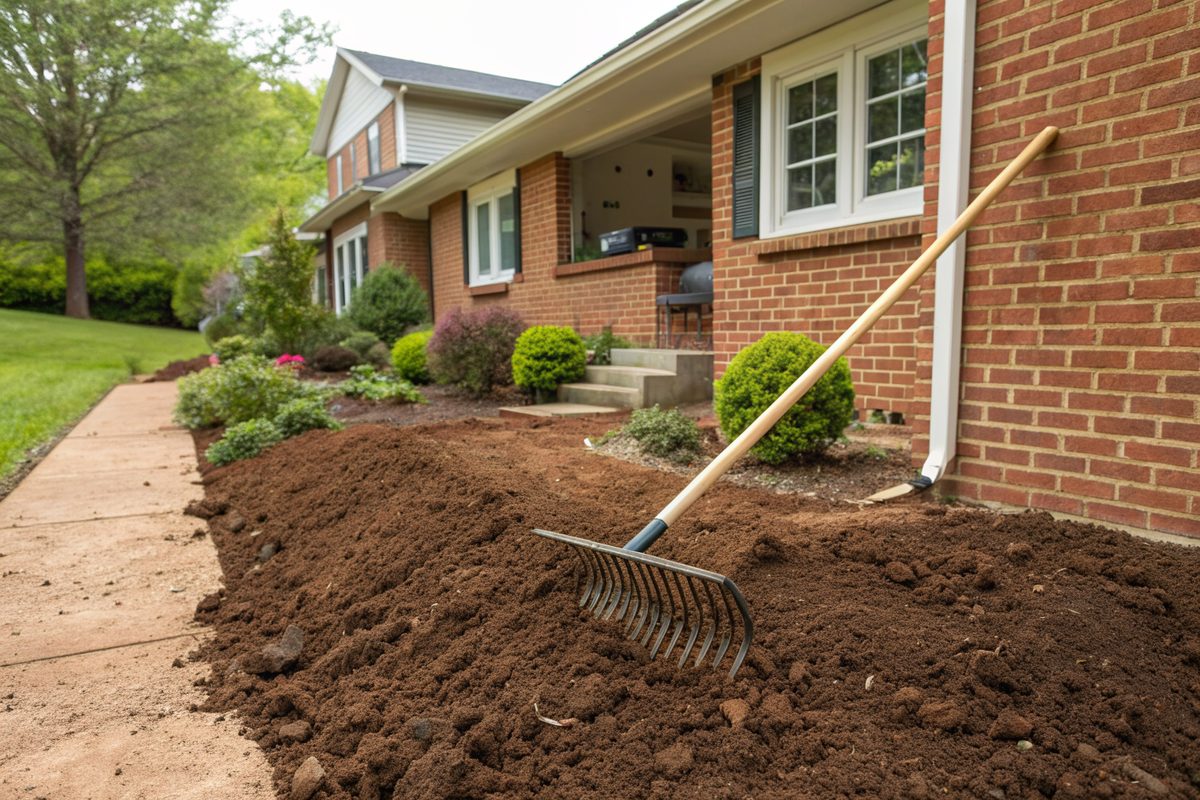
- A yard that slopes inward. Reshaping soil, or adjusting a patio, so water runs away from the house.
- Seepage at the floor's edge. Interior drain tile along one wall or the whole perimeter, feeding a sump.
- A low, soggy patch outside. An exterior French drain where the lot has room and a lower spot to send water.
What Moves the Price
| Cost row | Figure | Source (year) |
|---|---|---|
| Typical basement waterproofing project | about $3,000 to $10,000 (average about $5,000) | Fixr national (2026) |
| Interior perimeter drain, per linear foot | $40 to $120 | Fixr national (2026) |
| Sump pump installation | $600 to $2,500 | Fixr national (2026) |
| Epoxy crack injection, per crack | $250 to $1,000 | Fixr national (2026) |
| Waterproof paint or sealant, per sq ft | $1 to $8 | Fixr national (2026) |
The rows are national, not local averages. Interior drain is billed by the linear foot, so a single damp wall and a full loop end up far apart, and a new pit adds the sump row. Gutter and grading work is usually priced per job. The cost guide covers backflow valves and lateral repairs, and the cost calculator works out drain length from your floor size.
The Work, Start to Finish
- Watch a real storm. See where water pools in the yard and where it appears downstairs.
- Outside before inside. Gutters, downspout outlets and grading usually get checked before the floor.
- Footage in writing. A drain tile estimate lists which walls get pipe and the total length.
- Every outlet spelled out. The plan shows where downspouts and the sump line end, and nothing joins the sewer without checking first.
- Plumbing and permits. Backflow valves, drain connections and lateral work need a licensed plumber or drainlayer and a permit. The contractor confirms permits with the City's Building Division, (314) 622-3313, or your municipality.
- The next heavy rain. That is the real test.
Why One Contact Is Enough
Water usually has more than one route in, so it helps when one independent local contractor sees the roofline, yard and floor in one visit. The service is free and comes with no gift or payment; contractors may pay the site for advertising. This site digs no trenches, sets no prices and has no contractor license from the City of St. Louis or St. Louis County.
Before you sign, confirm the contractor's City business license through the License Collector at (314) 622-4528, or ask your own municipality what it requires in the County. The written contract should name the walls covered, the drain length, the outlet points, the price, a payment schedule and the warranty terms, including whether they transfer if you sell.
Common Questions
Can my downspouts stay connected to the sewer?
Ask first. In the City and older inner suburbs, rain and wastewater share old brick sewer tunnels, and roof water piped in adds to the load during storms. MSD handles disconnections in some project areas at no cost to the owner, so check with MSD whether your street is in one.
Is drain tile worth it in clay soil?
Often, because clay tends to hold water against the foundation instead of letting it soak away. An interior drain relieves that water at the base of the wall. A contractor can say whether gutters and grading alone might do.
Who owns the sewer pipe from my house to the street?
The owner does. MSD treats the lateral as private property to maintain. In the City, the Sewer Lateral Repair Program, funded by a $28 yearly charge on the tax bill, pays for breaks beneath the public right-of-way at homes of up to six units. County cities run their own programs.
Related Basement Work
Drain tile ends in a pit, which is where sump pump installation comes in; one damp spot may need basement leak repair or foundation crack repair, while full basement waterproofing explains complete systems.
Request a Drainage Estimate
In the form, mention where the yard stays wet, where water shows up inside and what kind of weather brings it. One independent local contractor serving St. Louis gets back to you about a visit and a written price; going ahead is your decision alone. Nothing else is needed to get started.