Foundation Crack Repair in St. Louis, MO
Cracks are common in St. Louis, Missouri basements, where many walls have stood for a century or longer, and most of them matter mainly because they let in water. This free referral service sends your request to one independent local contractor, who visits, measures the cracks and writes up repair choices with a price.
Not sure if we cover your area? Check now ↓
Basement Estimate Request
Takes about 30 seconds. One local contractor gets it and contacts you.
Your details go to one independent contractor who works around St. Louis, MO, and that contractor gets in touch with you directly. See our Referral Marketing Disclosure.
Hairline, Stair-Step or Horizontal?
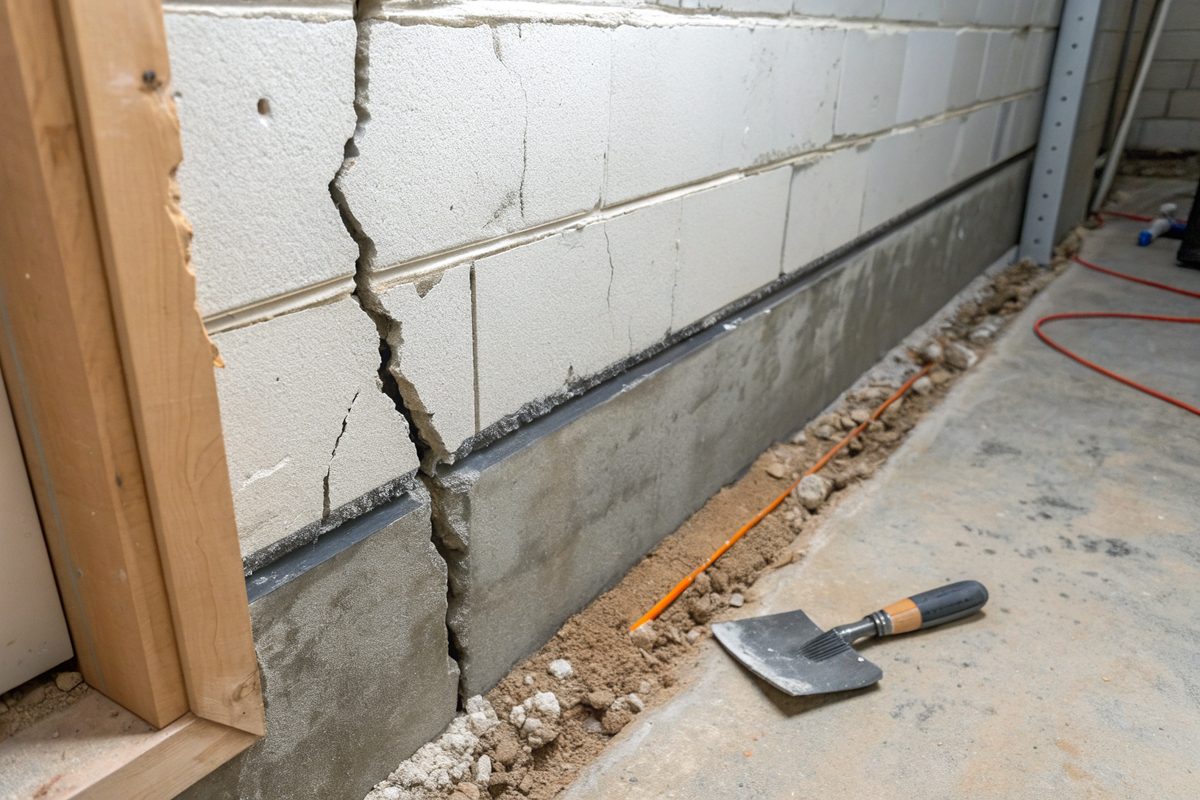
A crack's shape says a lot. Thin vertical or slightly angled lines in poured concrete usually come from shrinkage as the wall cured. Stair-step cracks follow the mortar joints in block or brick. A long horizontal crack, or one that keeps widening, is a different sign and worth having looked at soon. Poured walls are usually repaired by injection: small ports go along the crack, and epoxy or polyurethane is pumped in until the gap is full.
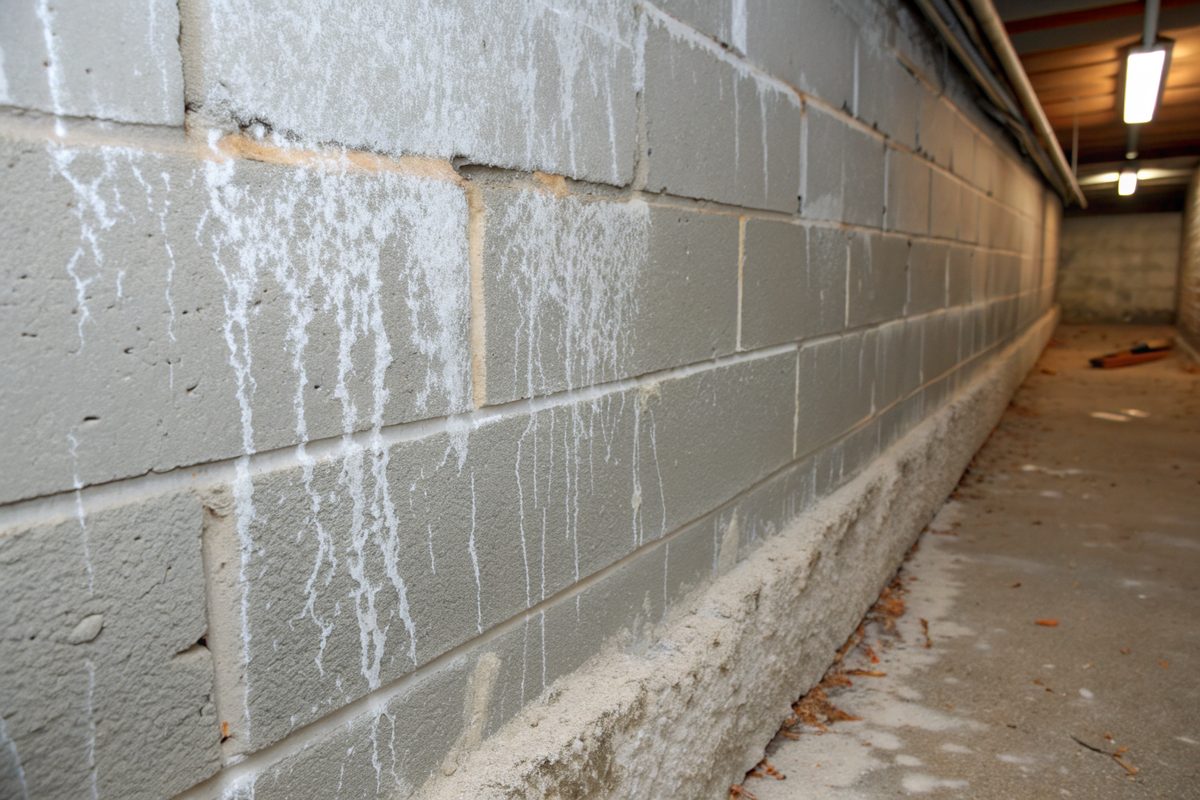
Brick and limestone rubble behave differently. About 58% of the City's homes were built by 1939 (Census survey), and brick became the rule after the 1849 fire, so many foundations here were laid in soft lime mortar that wears away over decades. Injection does little in loose joints or hollow block, so the usual answer is tuckpointing: raking out weak mortar and packing in fresh.
Some movement starts below the house. Parts of South City sit on karst, limestone with old sinkholes, and some lots were leveled with fill long ago (U.S. Geological Survey; St. Louis Magazine). Where fill was loosely packed, a house can settle slowly. It is rarely sudden, but a crack that arrives with sticking doors or a sloping floor belongs in your request.
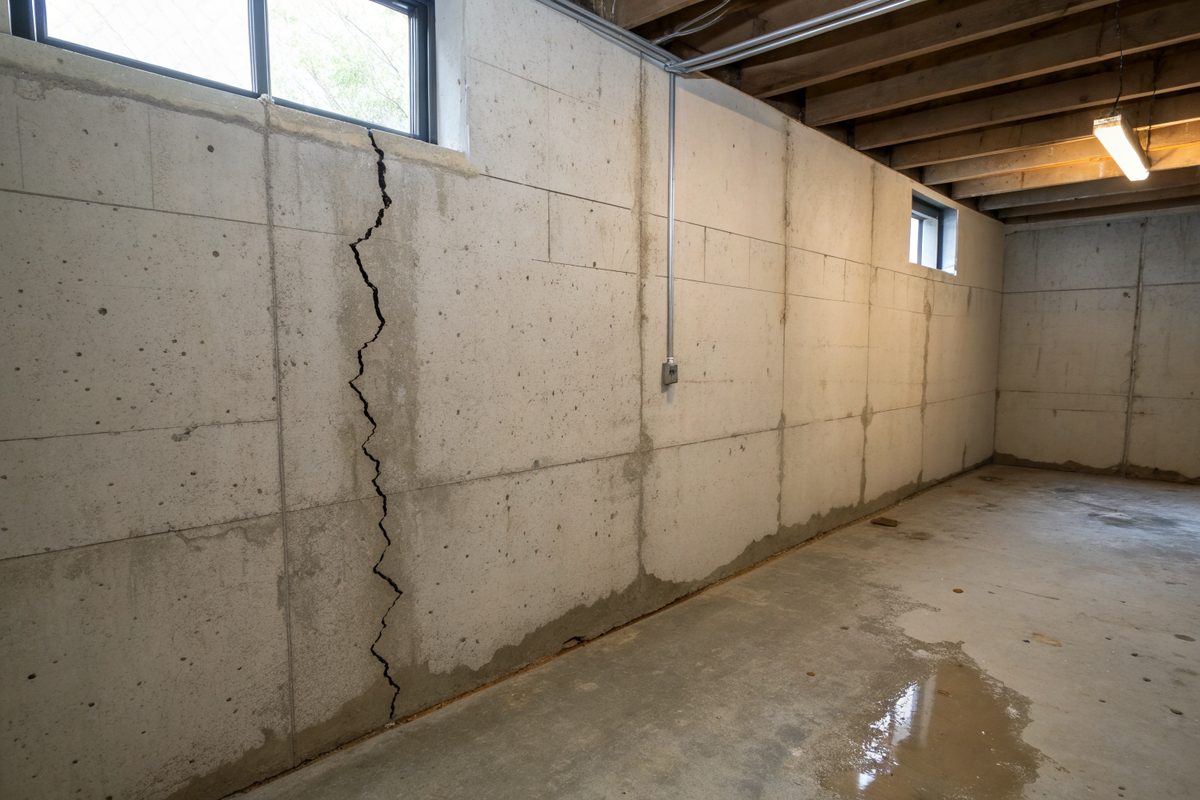
Common Situations
- Hairline cracks in poured walls. Injected from inside, typically in one visit with no excavation.
- Joint cracks in block or brick. Fresh mortar in the opened joints, with a drain added where water pressure keeps pushing.
- Crumbling mortar in limestone walls. Fresh mortar packed into joints that have turned to sand.
- A crack that only seeps. Sealing it and dealing with the gutter or grade that feeds it.
- A long sideways crack. In any type of wall, it deserves a contractor's attention soon.
- A wall that bows or leans inward. Point it out so the plan covers more than the crack itself.
- A crack that keeps growing. Put a dated pencil tick at both tips and look again each month; any lengthening belongs in your request.
What Moves the Price
| Cost row | Figure | Source (year) |
|---|---|---|
| Typical basement waterproofing project | about $3,000 to $10,000 (average about $5,000) | Fixr national (2026) |
| Interior perimeter drain, per linear foot | $40 to $120 | Fixr national (2026) |
| Sump pump installation | $600 to $2,500 | Fixr national (2026) |
| Epoxy crack injection, per crack | $250 to $1,000 | Fixr national (2026) |
| Waterproof paint or sealant, per sq ft | $1 to $8 | Fixr national (2026) |
For a single crack, the injection row is the one to watch; Fixr lists it per crack, nationally, and it is not a price from this site. Tuckpointing has no sourced figure, and underpinning or rebuilding a wall falls outside the table entirely, so ask for each as its own line in the estimate. The cost guide explains what pushes a St. Louis price up or down.
The Work, Start to Finish
- Photos with a tape measure. Shoot each crack beside a tape and write down the date.
- Questions about water. Wall type, when dampness shows and where the downspouts end.
- The method on paper. Each crack listed, with the planned repair, the material and the warranty terms.
- Permits. In the City, building permits cover foundation and footing repair, underpinning and shoring, while tuckpointing is generally exempt; in St. Louis County, ask your municipality. The contractor confirms what applies at your address.
- Follow-up. Check the repair after heavy rain and again after winter's freeze-thaw.
Why One Contact Is Enough
You describe the crack once, and the measuring and pricing belong to the contractor. This site is a free referral service, not a contractor, and carries no contractor license from either the City or the County. Nobody from the site visits, prices work or signs anything. Contractors may advertise here, free during a trial period, and you are never charged or given anything. For City jobs, check the contractor's business license with the License Collector, (314) 622-4528; in the County, ask your city hall what local license or registration applies.
Common Questions
Does every crack in a foundation need repair?
No. Thin vertical cracks in poured concrete usually date from curing and may stay dry for years, so sealing one makes sense once it lets water in. A crack running sideways, one that keeps widening, or a wall that bulges inward is the sort worth having looked at soon.
Can an old limestone or brick foundation be injected?
Not very well. Rubble stone and old brick hide voids that swallow injected material without closing the water's path. Tuckpointing with a mortar that suits the old masonry, often with drainage to cut water pressure, is the more common approach.
Epoxy or polyurethane: which is better?
Each fits a different aim. Epoxy cures hard and bonds the crack faces, while polyurethane foams and stays flexible, which suits a crack that simply needs to stop leaking. Ask which one is planned and why, and get the material named in the written estimate.
Could sinkholes be behind a crack in my basement?
Rarely in any dramatic way. Parts of South City sit on karst with old sinkholes, and some lots were filled long ago, so slow settling can happen there. A contractor can say whether a crack looks like ordinary shrinkage or movement, and whether a closer look makes sense.
Related Basement Work
A crack is sometimes one symptom of a wider water issue: the wet basement checker can help sort out the cause, and the guides to full basement waterproofing, basement drainage and basement leak repair cover the bigger fixes.
Start Your Crack Repair Request
Give the crack's length, the wall it runs along and whether it lets water in. A single independent contractor from the area will get in touch to set up a visit and a written estimate, and the next step stays yours. The form below is short.